Contents
- 1 Pointclickcare Cna (PCC POC Employee Access)
- 1.1 What PointClickCare Is and Who Uses It
- 1.2 Official PointClickCare Login Pages
- 1.3 How to Log In to PointClickCare
- 1.4 Main PointClickCare Login Pages
- 1.4.1 Main PointClickCare Login
- 1.4.2 PointClickCare CNA Login (Point of Care)
- 1.4.3 PointClickCare Point of Care (POC) Login
- 1.4.4 PointClickCare Customer Support Portal
- 1.4.5 PointClickCare Resource Hub
- 1.4.6 PointClickCare Marketplace Login
- 1.4.7 PointClickCare Provider/Health Care Login.
- 1.4.8 PointClickCare SSO (Single Sign On), Multi Factor, EHR Login.
- 1.4.9 PointClickCare Pulse Community Login
- 1.5 Pointclickcare Cna Login and Point of Care Login
- 1.6 What PCC Login Means
- 1.7 Why PointClickCare Login Fails So Often
- 1.8 Start With the Easiest Checks First
- 1.9 Invalid Username or Password Errors
- 1.10 Maximum Failed Login Attempts Exceeded
- 1.11 This Login Has Been Suspended
- 1.12 Passwords Expired and Still Acting Expired
- 1.13 Weak or Compromised Password Alerts
- 1.14 Application Down for Planned Maintenance Error When It Is Not Maintenance Time
- 1.15 Resource Hub Clicks But Nothing Happens
- 1.16 Single Sign-On Only Error
- 1.17 MFA and Authenticator Problems
- 1.18 What to Do If You Left Your MFA Device at Home
- 1.19 What If Your Phone Was Lost or Stolen?
- 1.20 Can You Use SMS Instead of an Authenticator App?
- 1.21 When You Need Your Facility Security Administrator
- 1.22 When to Contact PointClickCare Customer Care
- 1.23 How to Access the Customer Support Portal
- 1.24 Best Browser Practices for PCC Login
- 1.25 Practical Tips for Nurses and CNAs
- 1.26 PointClickCare Login FAQ
- 1.26.1 What is Pointclickcare Login?
- 1.26.2 What does PCC Login mean?
- 1.26.3 What is Pointclickcare Cna Login?
- 1.26.4 Where should I go for the official Pointclickcare Login page?
- 1.26.5 Why is my Pointclickcare Login not working?
- 1.26.6 Why does PCC Login say invalid username/password?
- 1.26.7 Can PointClickCare support reset my password?
- 1.26.8 Who should I contact if I forgot my PointClickCare password?
- 1.26.9 What happens after five failed Pointclickcare Login attempts?
- 1.26.10 How long does a PCC Login lockout last?
- 1.26.11 What does “This login has been suspended” mean?
- 1.26.12 Why does Pointclickcare Login say my password is expired even after a reset?
- 1.26.13 What does the weak or compromised password warning mean?
- 1.26.14 Can I fix a weak password warning by myself?
- 1.26.15 Why am I seeing “Application Down for Planned Maintenance” when it is not maintenance time?
- 1.26.16 How do I fix the planned maintenance error on Chrome?
- 1.26.17 Why should I avoid Internet Explorer for PCC Login?
- 1.26.18 Why does the Resource Hub not open when I click it?
- 1.26.19 What should IT allow for Resource Hub to work?
- 1.26.20 Why does Pointclickcare Login say I must use Single Sign-On?
- 1.26.21 Can I use Pointclickcare Login without SSO if my account is SSO-only?
- 1.26.22 What does it mean if my 6-digit authenticator code is invalid?
- 1.26.23 How do I reset MFA for PointClickCare?
- 1.26.24 What if I left my MFA phone at home?
- 1.26.25 What if my MFA phone was lost or stolen?
- 1.26.26 Can I use SMS instead of an authenticator app for PCC Login?
- 1.26.27 Can I use multiple devices for MFA?
- 1.26.28 Which authenticator app should I use?
- 1.26.29 Can I use a desktop or browser-based authenticator?
- 1.26.30 Who is required to use MFA in PointClickCare?
- 1.26.31 Will MFA apply to SSO users too?
- 1.26.32 How do I contact PointClickCare customer care?
- 1.26.33 How do I open the PointClickCare Customer Support Portal?
- 1.26.34 What information should I include when I open a support case?
- 1.26.35 What should nurses do first when Pointclickcare Cna Login fails during a shift?
- 1.26.36 What is the fastest way to troubleshoot PCC Login problems?
Pointclickcare Cna (PCC POC Employee Access)
Welcome! Whether, you are a new Point Click Care user, a seasoned nurse, or CNA, you will need to know the right page to lg¡og in. As it happens, PointClickCare as different login pages for different users, so it can be confusing. But we are here do help. Here, you can see all the Point Click Care Sign In pages on one page, and easily choose the right one for you.
This guide is written to make that process easier. It explains how Pointclickcare Login works, what PCC Login usually means, how Pointclickcare Cna Login commonly works for Point of Care users, what to do when login fails, and when you need to contact your facility security administrator instead of PointClickCare support. It also includes a detailed FAQ with practical answers you can actually use during a busy workday.
What PointClickCare Is and Who Uses It
PointClickCare is a healthcare software platform used across senior care and related settings. PointClickCare’s official login pages include a general senior care login, and the company also highlights Point of Care as a mobile-enabled tool for care staff to document tasks, ADLs, vitals, and resident care on kiosks, desktops, or mobile devices. In everyday practice, that is why you will hear people say Pointclickcare Login, PCC Login, or Pointclickcare Cna Login almost interchangeably, even though they may be signing in through slightly different screens depending on their role and facility setup.
Some users sign in through the main PointClickCare login page. Others use a Point of Care login screen that shows resident-task workflows and caregiver-friendly options. And some organizations use Single Sign-On, which means the login path may be controlled by the employer’s identity system rather than a standalone username-and-password screen.
All Types of PointClickCare Users
1. Certified Nursing Assistants (CNAs)
CNAs are one of the largest user groups.
They use PointClickCare to:
document resident care
record vitals
track activities of daily living (ADLs)
update patient status
They usually log in through the Point of Care system.
2. Nurses (LPNs and RNs)
Licensed nurses use the platform for:
medication administration records (MAR)
treatment documentation
physician orders
resident assessments
charting and care plans.
3. Nurse Practitioners & Physicians
Doctors and nurse practitioners access PointClickCare to:
review patient charts
issue medical orders
approve treatments
review care plans
monitor patient progress.
4. Medication Technicians / Pharmacy Staff
Medication technicians and pharmacy partners use it for:
medication tracking
prescription updates
pharmacy coordination
medication reconciliation.
5. Therapists
Therapists working in post-acute care facilities use it for:
physical therapy documentation
occupational therapy records
speech therapy treatment plans
rehabilitation progress tracking.
6. Facility Administrators
Administrators use the system to manage:
facility operations
regulatory compliance
resident admissions
reporting
staffing management.
7. Billing & Revenue Cycle Staff
Billing departments use the platform for:
claims processing
insurance verification
billing documentation
reimbursement tracking.
8. Social Workers & Care Coordinators
They use the system for:
discharge planning
care coordination
family communication
social care documentation.
9. Hospital Discharge Teams
Hospital staff use PointClickCare to:
transfer patients to nursing facilities
share patient data
coordinate care transitions.
10. Home Health & Hospice Providers
Home care providers use the platform for:
home visit documentation
patient care tracking
scheduling and care coordination.
Official PointClickCare Login Pages
For most account users, the safest place to start is the main official login area used for senior care customers. Many facilities also bookmark the direct account sign-in page for daily use. For Point of Care and CNA workflows, some organizations use a dedicated Point of Care sign-in page that may list available usernames or support keyboard, barcode, or swipe-card entry depending on the device and setup.
That is important because Pointclickcare Cna Login is not always one single public page for every facility. In many organizations, CNA users sign in to Point of Care through a facility-specific workflow, device, or shortcut. So if your screen looks different from a coworker’s screen in another building, that does not automatically mean something is wrong.
How to Log In to PointClickCare
The normal Pointclickcare Login process is straightforward when everything is working.
- Open your facility-approved browser or device.
- Go to your facility’s PointClickCare login page or the official PointClickCare login portal.
- Enter your username carefully.
- Enter your password exactly as it was set up. Passwords are case-sensitive.
- If your organization uses MFA, complete the code or authenticator step.
- Select Login and wait for the application to load fully.
Main PointClickCare Login Pages
Here are the primary login portals used across the platform.
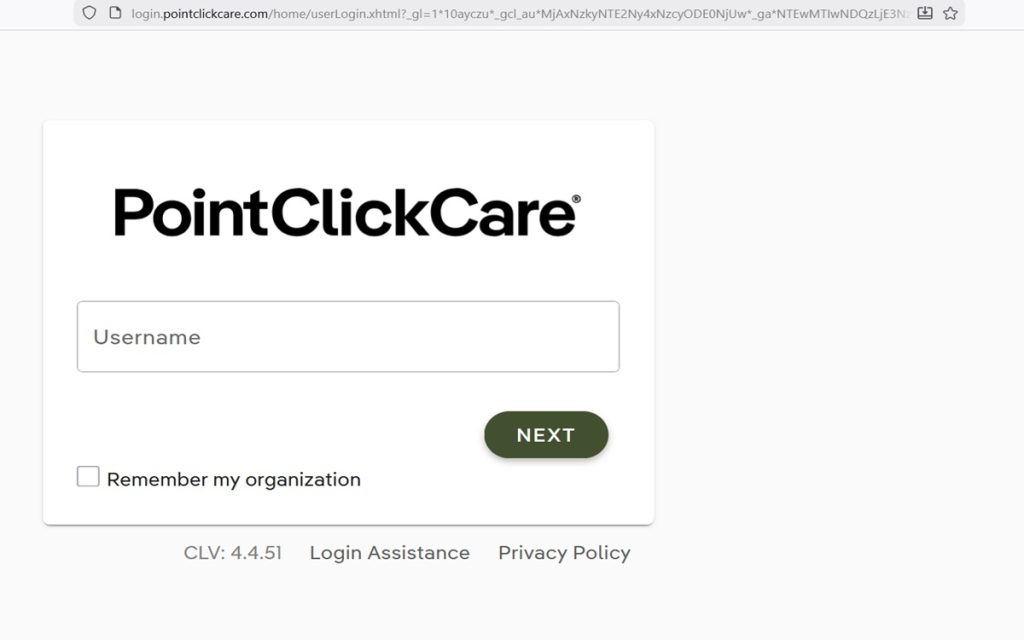
Main PointClickCare Login
PointClickCare
Official login page used by most facility staff.
URL:
https://login.pointclickcare.com (redirects to https://login.pointclickcare.com/home/userLogin.xhtml)
Users:
nurses
administrators
billing staff
physicians
care coordinators.
PointClickCare CNA Login (Point of Care)
Often called the CNA portal.
Used by frontline caregivers.
URL:
https://efs.pointclickcare.com/poc/userLogin.xhtml
Users:
CNAs
nursing aides
caregivers.
Purpose:
resident charting
care documentation
vitals entry.
PointClickCare Point of Care (POC) Login
Point of Care is the bedside documentation system.
URL:
https://poc.pointclickcare.com
if this url is down, try:
https://www21.pointclickcare.com/poc/cna/cna.xhtml
https://www25.pointclickcare.com/poc/userLogin.xhtml
https://www27.pointclickcare.com/poc/userLogin.xhtml
Users:
CNAs
nurses
caregivers.
Often accessed on:
facility kiosks
tablets
nurse stations.
PointClickCare Customer Support Portal
Used by facility administrators to contact support.
URL:
https://support.pointclickcare.com
Users:
facility admins
IT staff
managers.
PointClickCare Resource Hub
Resource Hub contains training and support materials.
URL:
https://resourcehub.pointclickcare.com
Users:
nurses
administrators
IT teams
trainers.
PointClickCare Marketplace Login
Used by partners and integration providers.
URL:
https://marketplace.pointclickcare.com/s/login/
Users:
software partners
healthcare vendors
integration developers.
PointClickCare Provider/Health Care Login.
Official URL:
https://secure.collectivemedical.com/static/edie-ui/#/login
PointClickCare SSO (Single Sign On), Multi Factor, EHR Login.
This is PointClickCare’s modern identity system.
URL:
https://accounts.pointclickcare.com/#/login
It is used for:
Single Sign-On (SSO)
centralized account authentication
multi-factor authentication (MFA)
access to multiple PCC applications.
Instead of logging directly into each module, users authenticate through the accounts service, which then grants access to:
EHR
Care Coordination
Analytics
mobile apps
partner integrations.
In other words:
Accounts.pointclickcare.com is the identity / authentication gateway.
PointClickCare Pulse Community Login
URL:
https://login.pointclickcare.com/pulse/userLogin.xhtml
Used for:
user forums
training discussions
product updates.
Pointclickcare Cna Login and Point of Care Login
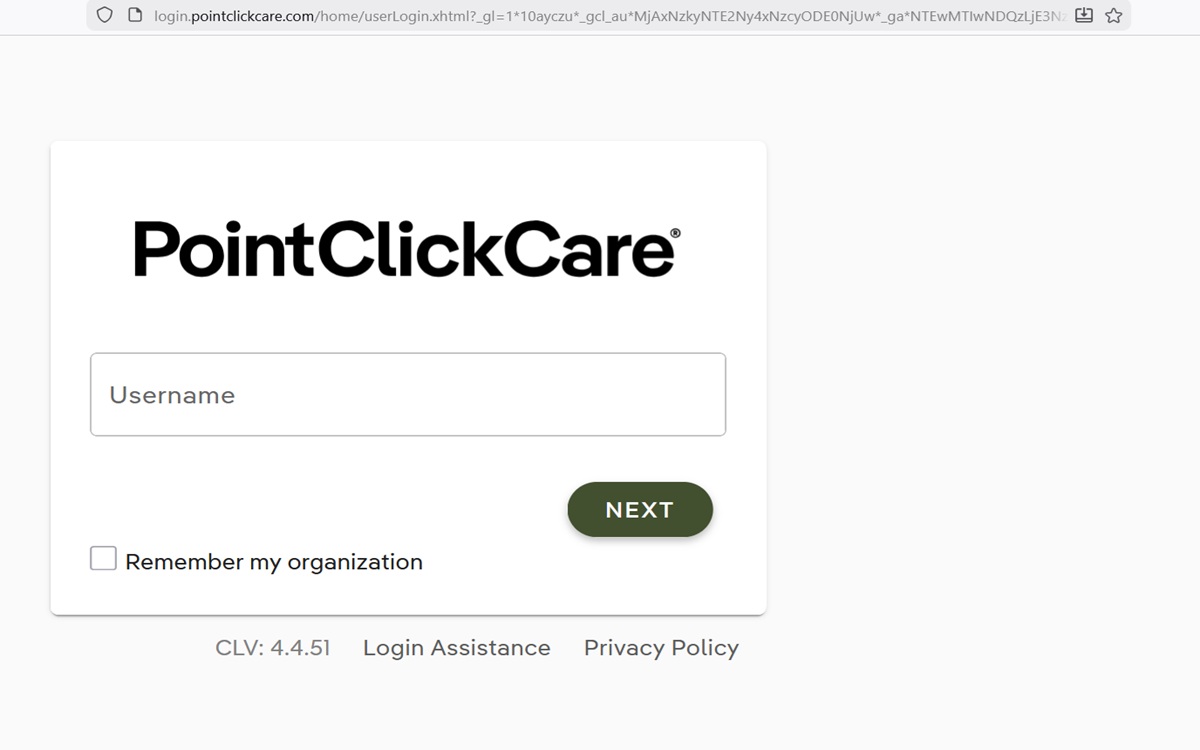
Pointclickcare Cna Login usually refers to Point of Care access used by CNAs and other direct-care staff. PointClickCare describes Point of Care as a mobile-enabled application that helps care teams document activities of daily living and other real-time care tasks at or near the point of care. In practice, that means many CNA users do not log in through the exact same screen used by billing, back-office, or management users.
Some facilities use wall-mounted kiosks. Some use carts or tablets. Some use desktop stations. Some support barcode, swipe-card, or keyboard entry. So if you are looking for Pointclickcare Cna Login, the right answer is often: use the Point of Care login method your facility assigned to you, and if you are unsure, ask your unit lead, on-duty supervisor, or facility IT team which screen is the correct one for your role.
What PCC Login Means
PCC Login is just a shorter way people refer to Pointclickcare Login. Staff use the short phrase because it is faster, especially in emails, support tickets, and hallway conversations. If someone says “my PCC Login is not working,” they usually mean they cannot get into PointClickCare, Point of Care, eMAR, or another PointClickCare-connected application their facility uses.
So when you search for PCC Login, make sure you are starting from an official PointClickCare login resource or from your organization’s approved shortcut. Do not trust random search results or copied links from unknown sources.
Why PointClickCare Login Fails So Often
Most failed Pointclickcare Login attempts come from a few repeat causes. The username is wrong. The password is wrong. The browser stored an old password. The account is locked for a few minutes after too many failed attempts. The account is suspended. The device is on the wrong network. A facility policy requires Single Sign-On. Or MFA is blocking access because the user changed phones, lost a device, or entered too many invalid codes.
That list sounds long. It is. But it also means most problems are predictable. And predictable problems are easier to fix.
Start With the Easiest Checks First
Before assuming your account is broken, go through the basics:
- Make sure you are on the correct login page.
- Type the username and password manually instead of trusting autofill.
- Check Caps Lock.
- Make sure the device is on the expected facility network if your organization uses IP-based controls.
- Try your facility’s preferred browser, especially Google Chrome if support materials recommend it.
These sound obvious. They still fix a surprising number of PCC Login problems.
Invalid Username or Password Errors
If you see an invalid username/password error, the first thing to know is that PointClickCare says usernames and passwords are case-sensitive, and PointClickCare support does not reset passwords for facility users. Those issues must be handled by your facility’s Security Administrator, internal IT/help desk, or on-duty supervisor according to PointClickCare’s public support guidance.
A very common cause is browser autofill. If your password was changed recently but your browser keeps inserting the old one, your Pointclickcare Login will keep failing even though you think you entered the correct password. Delete the saved password, type it manually, and try again.
Maximum Failed Login Attempts Exceeded
If you see a message saying the maximum number of failed login attempts has been exceeded, do not keep hammering the login button. PointClickCare’s public support article says the official default lockout time is five minutes. In other words, the fastest fix is often to stop, wait, and then try again carefully once the lockout period has passed.
That is short. But important. Wait first. Then retry.
This Login Has Been Suspended
If your screen says the login has been suspended, that usually means your permission to access PointClickCare has been disabled or revoked. This is not a browser-cache problem. It is not something you can usually fix yourself.
In that case, contact your Facility Security Administrator and ask them to review and re-enable the account if appropriate. If you are on shift and need urgent access, involve your supervisor right away.
Passwords Expired and Still Acting Expired
Another frustrating PCC Login issue happens when a password was reset, but the user still gets told the password is expired. PointClickCare’s public support guidance says this can happen when the password-expiry rule is still configured in a way that blocks the user from logging in and changing the password normally. The fix is typically on the admin side, not the user side.
In practical terms, that means the user should stop retrying random passwords and contact the facility administrator or security team. Once the admin updates the security profile or expiry rule correctly, the user can sign in again and complete the password change workflow.
Weak or Compromised Password Alerts
If PointClickCare tells you your current password is weak or compromised, do not ignore it. PointClickCare says it checks public compromise data and uses trusted third-party solutions to identify passwords exposed in outside security incidents. If your password shows up on that kind of list, you may be forced to change it before access is allowed.
This does not necessarily mean PointClickCare itself was breached. The support article says the exposure can come from an unrelated external security incident. But it still matters because reusing compromised passwords creates real risk.
Application Down for Planned Maintenance Error When It Is Not Maintenance Time
This is one of the stranger login problems because the message makes it sound like the whole platform is down. PointClickCare’s public support article says this can happen when your browser cached an old maintenance page and keeps showing it even after maintenance ended. In other words, the screen may be stale even though the system is back.
The fix is usually to clear cache and cookies, close the browser fully, reopen it, and then try Pointclickcare Login again. PointClickCare specifically notes that Internet Explorer should no longer be used, and if clearing cache in another browser does not help, switching to Google Chrome is advised. If you use a desktop shortcut for PointClickCare, log in through the main browser once after clearing cache so the shortcut can refresh its cookies correctly.
Resource Hub Clicks But Nothing Happens
If you click Resource Hub and nothing opens, PointClickCare’s public guidance says the cause can be network issues, browser issues, security filtering, firewall restrictions, or blocked pop-ups. The article also recommends working with your internal IT team to trust the required email domains and URLs and to allow pop-ups for the relevant PointClickCare-connected pages.
That means this is usually bigger than one user. If multiple staff members click Resource Hub and nothing happens, involve facility IT instead of wasting time on just one workstation. The root cause may be network policy, safe-browsing rules, firewall setup, or browser controls across the facility.
Single Sign-On Only Error
If you receive a message like “We cannot log you in because you are only allowed to use single sign-on using your company credentials,” your account is probably configured for SSO-only access. PointClickCare’s public article says administrators should review the user’s security profile and uncheck the Single Sign-On Login Only setting if that was enabled incorrectly for the user in question.
For the user, the takeaway is simple. Do not keep trying the local login form if your organization expects SSO. Use the company credential route your employer assigned, or contact your administrator to confirm whether the account was configured incorrectly.
MFA and Authenticator Problems
PointClickCare’s MFA rollout and FAQ materials make clear that MFA is increasingly important for security, especially for remote users and IT administrators. MFA can require a code from an authenticator app or, in some cases, an SMS code, depending on your organization’s setup. That extra step improves security, but it also creates a new category of login problems when a device changes or a code is rejected.
If the six-digit code from your authenticator app is rejected as invalid, PointClickCare’s public support article says the reset has to be done by an administrator with the right permissions. The admin must go to the security user area and reset Multi-Factor Authentication for the affected user. PointClickCare support says it does not change security settings or reset passwords for facility users.
What to Do If You Left Your MFA Device at Home
PointClickCare’s MFA FAQ says to contact your organization’s IT administrator if you do not have your mobile device with you. For some remote users or IT administrators, IP matching may allow MFA to be bypassed while physically on facility premises if the organization has enabled that feature. But that is an organizational setting, not a personal workaround.
So if you forgot your phone, do not guess. Ask IT whether your facility has an approved on-premises exception or whether your MFA must be reset.
What If Your Phone Was Lost or Stolen?
If the phone used for MFA is lost or stolen, PointClickCare’s FAQ says to contact your IT administrator so MFA can be reset and re-enrolled. Once the reset is completed, the user can register the new device at the next login. That is the correct path. Fast. Clean. Secure.
It is also good practice to report a lost phone immediately, not days later, because MFA devices are part of your access control. Delays create unnecessary risk.
Can You Use SMS Instead of an Authenticator App?
PointClickCare’s MFA FAQ says some users can receive a six-digit SMS code instead of using an app, and some organizations allow both SMS and an authenticator app to be active. The FAQ also notes that authenticator apps are generally more secure than SMS, especially for high-risk roles such as IT administrators. So if you have a choice, the app is usually the stronger option.
Still, SMS can be useful as a backup. Especially on a hard day.
When You Need Your Facility Security Administrator
This is one of the most important parts of the whole article. A lot of Pointclickcare Login problems are not fixed by PointClickCare support directly. Public support guidance says password resets, suspended accounts, some expiry issues, SSO configuration issues, and many security changes must be handled by the local security administrator or facility IT team. That means knowing who your internal contact is matters just as much as knowing the login page.
If you are a nurse or CNA and you cannot get into the system during a shift, the fastest path is often your facility’s internal help desk, security administrator, or on-duty supervisor. Start there first for account-access issues.
When to Contact PointClickCare Customer Care
PointClickCare does offer customer support resources. The company’s customer support page says support is available 24/7, and support cases can be submitted through the Customer Support Portal accessed from the Resource Hub inside the software. Public support contact pages also reference calling customer support at 1-877-722-2431 for assistance in some situations.
Use PointClickCare customer care when the issue looks product-related, system-related, or broader than one user. Use internal facility security and IT when the problem is password reset, local account permissions, SSO setup, MFA reset, or user security profile changes.
How to Access the Customer Support Portal
PointClickCare’s customer support page says the normal path is to sign in to the software, click the Resource Hub icon at the top right, and select Customer Support Portal. The same page says first-time users should open My Profile and confirm or update their details so the support team can contact them. To create a case, users can open the portal and select Create Case.
When submitting a case, PointClickCare recommends being descriptive. Include the browser you are using, the step-by-step path to the problem, example users if relevant, the scope of impact, and screenshots when possible. That makes support faster and better.
Best Browser Practices for PCC Login
Public PointClickCare support content explicitly says Internet Explorer should no longer be used. Chrome is commonly recommended, especially when troubleshooting cached maintenance pages or other browser-related odd behavior. If your PCC Login is failing on an older browser or on a workstation with lots of stale cookies, switching to Chrome and clearing browser data can save time.
Browsers matter more than people think. Especially in healthcare software.
Practical Tips for Nurses and CNAs
If you are using Pointclickcare Cna Login or another Point of Care workflow, the best habits are simple:
- Use the exact login path your facility assigned.
- Do not share passwords.
- Do not keep reusing an old saved password after a reset.
- Report repeated MFA failures quickly.
- Escalate suspended-account and permission problems to your supervisor or security admin right away.
That keeps your shift moving and reduces avoidable charting delays.
PointClickCare Login FAQ
What is Pointclickcare Login?
Pointclickcare Login is the sign-in process used to access PointClickCare applications and related workflows. Depending on your role, that may mean the general PointClickCare portal, Point of Care, eMAR, or another connected screen your facility uses. The exact login page can vary by organization, but the goal is the same: secure access to the system you need for work.
What does PCC Login mean?
PCC Login is simply shorthand for Pointclickcare Login. Staff use it constantly because it is quicker to say and type. If someone says “my PCC Login is down,” they usually mean they cannot access PointClickCare or a related PointClickCare workflow.
What is Pointclickcare Cna Login?
Pointclickcare Cna Login usually refers to Point of Care access used by CNAs and direct-care staff. Point of Care is designed for real-time documentation near the resident and may run on kiosks, desktops, or mobile devices. That means the CNA login experience may look different from the main account-user portal used by administrative staff.
Where should I go for the official Pointclickcare Login page?
You should use your facility-approved PointClickCare link or the official PointClickCare login resources. PointClickCare’s public login page links to the senior care login area, and many organizations bookmark the account sign-in page directly. Avoid random search results and use only trusted, official login routes.
Why is my Pointclickcare Login not working?
The most common reasons are an incorrect username, an incorrect password, an old saved password in the browser, a temporary lockout after too many failed attempts, an MFA problem, or a suspended account. Sometimes the issue is browser cache or a network/IP restriction rather than your credentials. Start with the basics before assuming the whole system is down.
Why does PCC Login say invalid username/password?
PointClickCare’s public support materials say usernames and passwords are case-sensitive, so even small typing mistakes matter. Another common cause is browser autofill using an outdated password after a recent change. If the error continues, contact your Facility Security Administrator because PointClickCare support does not reset facility user passwords.
Can PointClickCare support reset my password?
No, not for normal facility user access issues. PointClickCare’s customer support and login guidance say password issues must be handled by the local Security Administrator, facility IT/help desk, or on-duty supervisor. That rule exists because of privacy and security requirements.
Who should I contact if I forgot my PointClickCare password?
Contact your Facility Security Administrator first. If your facility has an internal help desk, they may handle the process for the security team. If you are on shift and cannot wait, escalate to the on-duty supervisor so the right internal person can respond quickly.
What happens after five failed Pointclickcare Login attempts?
PointClickCare’s public support article says the official default lockout period is five minutes after the maximum failed login attempts message. That means your login is temporarily disabled for security reasons. The best move is to wait the full lockout period and then try again carefully instead of making the situation worse.
How long does a PCC Login lockout last?
The public support article says the official default lockout time is five minutes. However, administrators may configure settings in ways that affect how failed-attempt behavior works in their own environment. If you keep getting locked out, involve your facility administrator instead of guessing repeatedly.
What does “This login has been suspended” mean?
It usually means your permission to access PointClickCare has been disabled or revoked. This is not usually something the user can repair alone. Contact your Facility Security Administrator and supervisor so they can review your access status and re-enable the account if appropriate.
Why does Pointclickcare Login say my password is expired even after a reset?
PointClickCare’s support article explains that this can happen when the password-expiry rule is still configured in a way that keeps blocking the account. In that case, the fix is usually inside the user’s security profile and has to be handled by an administrator. The user should stop retrying and ask the facility security team to review the expiry settings.
What does the weak or compromised password warning mean?
It means PointClickCare detected that your password appears on lists of passwords exposed in outside security incidents. The support article says PointClickCare monitors public compromise data and requires a password change when a user’s password is flagged. This is a protective step and does not necessarily mean PointClickCare itself was the source of the exposure.
Can I fix a weak password warning by myself?
You usually need the password changed, but the public support article says PointClickCare support analysts do not change user passwords. That task must be performed by the appropriate local security administrator, depending on your organization’s structure. Contact your internal security team to complete the change properly.
Why am I seeing “Application Down for Planned Maintenance” when it is not maintenance time?
PointClickCare’s public support article says this often happens because the browser cached an old maintenance page. In other words, your browser is showing stale content rather than the live application state. Clearing cache and cookies, closing the browser fully, reopening it, and logging in again is the normal fix.
How do I fix the planned maintenance error on Chrome?
Clear Chrome’s browsing data, including cookies and cached images/files, using the all-time range, then fully close and reopen Chrome. PointClickCare’s article also notes that if you use a desktop shortcut, you should log in from the main browser once after clearing cache so the shortcut can refresh properly. If the problem continues in another browser, PointClickCare advises switching to Google Chrome.
Why should I avoid Internet Explorer for PCC Login?
PointClickCare’s public troubleshooting article specifically says Internet Explorer should no longer be used. Older browsers can create compatibility and cache problems that make login issues harder to diagnose. Using a current supported browser is one of the fastest ways to remove an entire category of avoidable errors.
Why does the Resource Hub not open when I click it?
PointClickCare’s public article says the cause can be network restrictions, browser problems, blocked pop-ups, or trusted-site and safe-browsing settings that were never configured correctly. This often affects more than one user. If the Resource Hub is dead for several people, involve your internal IT team because the problem may be a facility-wide policy issue.
What should IT allow for Resource Hub to work?
PointClickCare’s public article says IT should review trusted email domains, firewall and spam-manager settings, and the relevant PointClickCare-related URLs. The same article also says pop-ups should be allowed for the listed URLs. In practice, this is an IT checklist, not something most nurses or CNAs should try to solve alone.
Why does Pointclickcare Login say I must use Single Sign-On?
That message usually means your account was configured for SSO-only access. PointClickCare’s article says administrators should review the user’s security profile and remove the SSO-only setting if it was enabled incorrectly. If your organization truly uses SSO, then you need to sign in through the employer’s SSO route rather than the standard local login form.
Can I use Pointclickcare Login without SSO if my account is SSO-only?
Not unless your administrator changes the account configuration. The public support guidance says the SSO-only setting lives in the user’s security profile. So if the account is meant to be local but was set up wrong, your admin must fix it; if the account is truly SSO-managed, you need to use the approved company credential path.
What does it mean if my 6-digit authenticator code is invalid?
It usually means MFA validation failed, often after multiple unsuccessful attempts or a broken authenticator setup. PointClickCare’s public article says the MFA setup must be reset by an administrator with the correct permissions. Users generally cannot fix this themselves without admin help.
How do I reset MFA for PointClickCare?
The user does not normally reset it alone. PointClickCare’s public support article says an administrator must go to the security user area, choose the affected user, and select Reset Multi-Factor Authentication. After the reset, the user can re-enroll the next time they sign in.
What if I left my MFA phone at home?
PointClickCare’s MFA FAQ says you should contact your IT administrator for help. Some organizations may use IP-matching or on-premises exceptions that allow access while physically inside the facility, but that depends on local setup. Do not assume an exception exists; ask first.
What if my MFA phone was lost or stolen?
Report it immediately to your IT administrator. PointClickCare’s FAQ says the administrator should reset MFA so you can re-register a new device at your next sign-in. Fast reporting matters because the phone is part of your account security.
Can I use SMS instead of an authenticator app for PCC Login?
PointClickCare’s MFA FAQ says some users can use SMS-based codes, and some organizations allow both SMS and an authenticator app. However, the FAQ also says authenticator apps are generally more secure than SMS, especially for higher-risk roles. If you have a choice, the app is usually the stronger option.
Can I use multiple devices for MFA?
PointClickCare’s MFA FAQ says users may be able to install the authenticator app on multiple devices and scan the QR code, depending on organizational setup. The same FAQ warns against sharing devices or numbers with others because that can weaken account security. If you are unsure what your organization allows, ask IT before enrolling multiple devices.
Which authenticator app should I use?
PointClickCare’s MFA FAQ says standard TOTP apps such as Google Authenticator, Microsoft Authenticator, or Duo Mobile can be used. The FAQ advises users to check with their IT system administrator for guidance. PointClickCare support does not troubleshoot third-party authenticator apps for you.
Can I use a desktop or browser-based authenticator?
PointClickCare’s FAQ says mobile authenticator apps are considered best practice because they keep the second factor separate from the computer. However, the FAQ also says desktop or browser-based TOTP tools can satisfy the requirement if that is the only viable option. Again, your IT team should guide the choice.
Who is required to use MFA in PointClickCare?
PointClickCare’s MFA FAQ says mandatory MFA applies to remote users and to users with IT Administrator-level access. The organization may also phase enforcement by rollout cohort, so not everyone sees the prompt at the same time. If you are not sure whether you are in scope, ask your IT administrator.
Will MFA apply to SSO users too?
PointClickCare’s FAQ says users who sign in through the organization’s SSO provider use that provider’s authentication controls, including any MFA the identity provider requires. Users who sign in directly to PointClickCare with a username and password are the ones subjected to PointClickCare MFA. So the answer depends on your login model.
How do I contact PointClickCare customer care?
PointClickCare’s public support resources say support is available 24/7 through the customer support portal, and public contact snippets also reference calling 1-877-722-2431 for assistance in some support situations. For general company contact, PointClickCare also publishes a toll-free main number on its contact pages. But for day-to-day login access issues, your facility security admin is often the faster first contact.
How do I open the PointClickCare Customer Support Portal?
PointClickCare’s customer support page says to sign in to the software, click the Resource Hub icon at the top right, and choose Customer Support Portal. First-time users should open My Profile and confirm their contact details. To submit a case, use the Create Case option inside the portal.
What information should I include when I open a support case?
PointClickCare recommends being specific. Include the browser you were using, the exact steps to reproduce the problem, screenshots if you have them, whether one user or many users are affected, and safe resident examples such as MRN only where relevant. Detailed cases get better support faster.
What should nurses do first when Pointclickcare Cna Login fails during a shift?
First, verify you are on the correct Point of Care or facility-assigned login screen. Second, type the password manually and check whether the workstation is on the correct network and browser. Third, if the problem persists, escalate quickly to your supervisor or internal help desk instead of losing time on repeated failed attempts and lockouts.
What is the fastest way to troubleshoot PCC Login problems?
Start with the simplest checks that eliminate the most common causes: correct page, correct username, manual password entry, no old autofill, correct browser, and correct network. Then look at the exact error message because PointClickCare’s public support articles treat suspended accounts, lockouts, expired passwords, SSO, cached maintenance pages, and MFA failures as different problems with different fixes. The exact wording matters.